Estimated reading time: 7 minutes
Key Takeaways
- Smart classroom management tools streamline processes and elevate student engagement.
- Interactive learning environments leverage IoT, AI, and AR/VR to personalize educational experiences.
- Cloud-based classroom solutions provide flexibility and scalability but require robust data security measures.
- Implementing a smart classroom strategy involves structured planning, staff training, and ongoing evaluation.
- Future classrooms will embrace AI-driven tutoring, predictive analytics, and immersive technologies.
Table of contents
- Introduction
- What Makes a Classroom Smart?
- Core Technologies Behind Smart Classrooms
- Choosing the Right Digital Smart Classroom Software
- Implementation Strategies for Schools
- Measuring ROI and Learning Outcomes
- Data Security and Privacy in Smart Classrooms
- Government and Industry Support Worldwide
- The Future of Digital Smart Classrooms
- Conclusion: Building Smarter Schools for Tomorrow
- FAQ
Introduction
In today’s ever-evolving educational landscape, the integration of technology plays a critical role in optimizing learning experiences. Smart classroom management tools are at the forefront of this transformation, offering educators and administrators the resources they need to enhance classroom engagement and streamline operations. In this comprehensive guide, we’ll explore digital smart classroom solutions, smart classroom software, interactive learning tools, and cloud-based classroom management software to create a seamless smart classroom implementation.
Smart classroom management tools are reshaping modern education by streamlining processes and enhancing engagement. Leveraging digital solutions and intuitive software, educators can foster interactive learning environments that are efficient and engaging. These tools, which often include interactive learning tools and cloud-based classroom management software, form the backbone of any successful smart classroom implementation. According to GovTech’s perspective on smart classrooms, effective smart classrooms are built on hardware, software, and sound pedagogy.
What Makes a Classroom Smart?
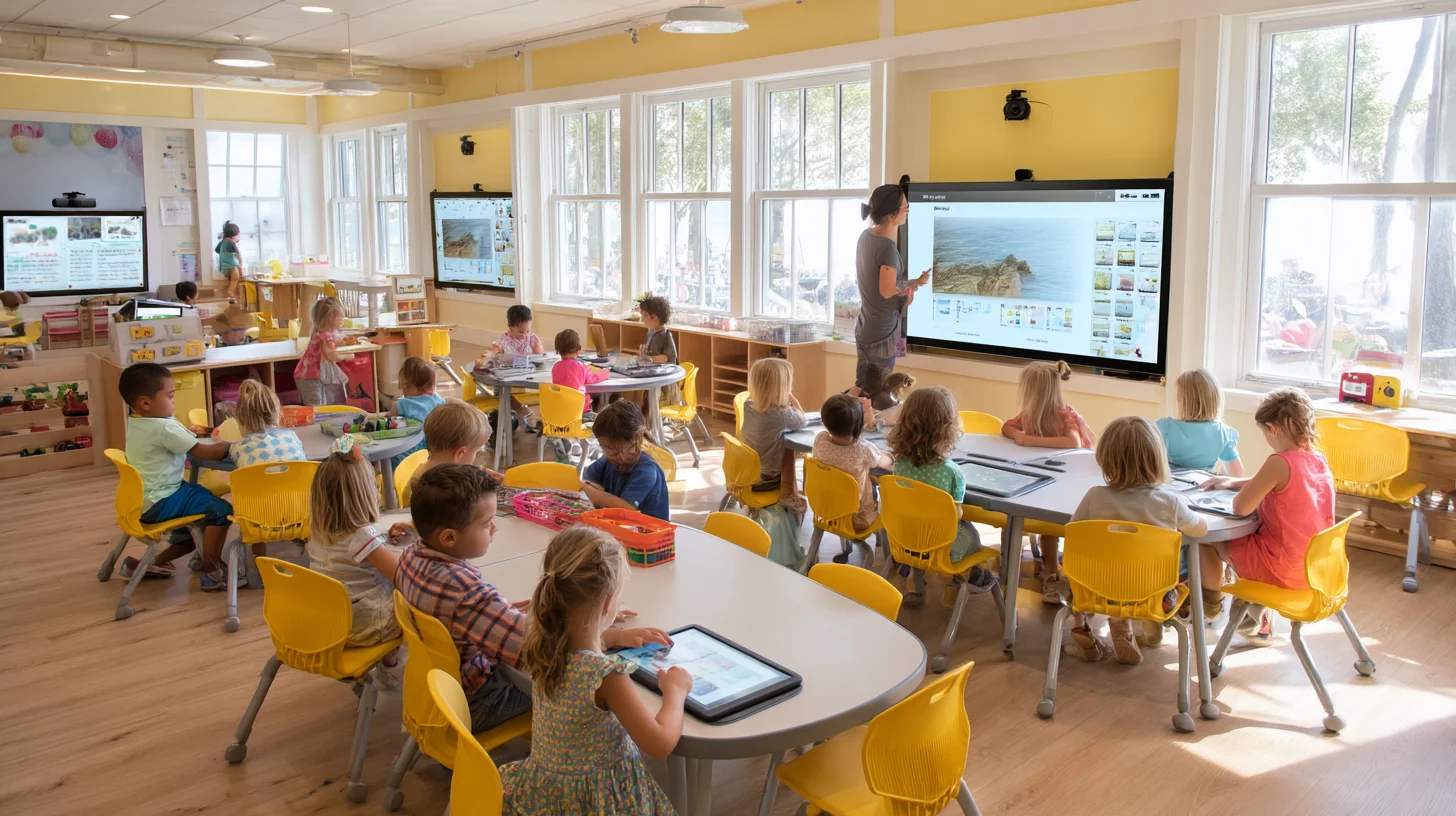
A smart classroom is a technology-enabled environment that integrates digital solutions with effective instructional strategies. Unlike traditional classrooms, smart classrooms offer immediate feedback, real-time monitoring, and personalized learning paths. Key components include:
- Hardware: Interactive whiteboards, student devices like tablets and laptops, and AR/VR headsets.
- Software: Smart classroom software, virtual platforms, content-sharing tools, and LMS integration.
- Pedagogy: A student-centric approach, collaborative learning, and data-driven instruction.
Insights from Aachi Global School outline these components, while Blocksi’s exploration of future trends highlights emerging strategies in smart classroom management.
Read More: Best Learning Games for Preschoolers to Make Education Fun
Core Technologies Behind Smart Classrooms
IoT, AI, and AR/VR technologies are pivotal in shaping smart classroom implementations, with IoT facilitating connected devices and data sharing. AI adapts learning experiences and automates assessments, while AR/VR provides immersive lessons that enhance retention and engagement. Interactive learning tools, such as smart projectors and response systems, promote interactive activities that involve students in the learning process.
The seamless integration of these technologies ensures effective communication, efficient monitoring, and comprehensive data collection, as detailed by ClassVR’s overview of smart classrooms and CMIT Solutions’ insights.
Choosing the Right Digital Smart Classroom Software
Selecting the right smart classroom software and management tools involves several considerations:
- Real-time device monitoring and control: Allows teachers to view and control student screens, reducing distractions.
- Content filtration/security: Ensures a secure and focused learning environment.
- Seamless LMS integration: Important for managing assignments and grades.
- Historical analytics: Provides insights for personalized interventions.
- Communication tools: Enhance announcements and feedback between teachers and students.
- Intuitive interface: Essential for ease of use.
Comparing cloud-based classroom management software to on-premise options reveals benefits such as scalability and flexibility, though data control and privacy remain top considerations. Popular options like Blocksi and resources from GovTech underscore comprehensive features and best practices.
Learn more about enhancing education with preschool-specific management solutions through our resources on Interactive Preschool LMS and the importance of a Preschool Management System.
Implementation Strategies for Schools
Implementing smart classrooms effectively requires a structured approach:
- Needs assessment: Identify institutional and curriculum requirements.
- Infrastructure readiness: Ensure network stability and device availability.
- Select digital solutions: Align choices with budget and goals.
- Train staff: Equip teachers with the knowledge to use new platforms.
- Pilot project: Deploy in a single grade or department before scaling.
- Assess feedback: Refine the approach based on pilot results.
Integrating Cloud-Based Solutions
Cloud-based solutions offer accessibility, real-time updates, and reduced maintenance needs. However, they also pose challenges such as reliable internet requirements and data privacy issues, which demand careful planning and skilled personnel to manage, according to CMIT Solutions.
Read More: Interactive Apps for Early Childhood Learning: Top Picks and Practical Tips for Parents
Enhancing Interactivity with Technology
Interactive learning tools, such as digital quizzes, polls, gamified apps, and AR/VR, promote engagement and cater to varied learning styles. These technologies enhance collaboration and support diverse educational strategies, as highlighted by ClassVR and the blog post on gamification in preschool learning.
Addressing Common Challenges
Managing distractions and ensuring seamless software integration are crucial. Smart classroom management tools offer robust monitoring capabilities, while professional development ensures teachers are prepared to use the technology effectively. Addressing equity issues ensures all students benefit from these technologies, as emphasized in Blocksi’s resources.
For additional insights on digital tools, explore recommendations for educational apps for preschoolers.
Measuring ROI and Learning Outcomes
Smart classroom software provides comprehensive analytics to track metrics such as usage rates, assignment completion, and real-time quiz data. Data-driven approaches enable personalized learning interventions, leading to improved outcomes. Institutions have reported improvements in test scores and reduced classroom disruptions post-implementation, according to Blocksi’s findings.
Data Security and Privacy in Smart Classrooms
Protecting student data is paramount when using cloud-based classroom management software. Compliance with regulations like FERPA and GDPR, along with robust encryption and secure login protocols, are crucial for safeguarding sensitive information. Training educators to manage digital data responsibly is also vital, as discussed by GovTech in its examination of smart classroom standards.
Government and Industry Support Worldwide
Global initiatives support smart classroom adoption through digital education missions, grants, and subsidies. EdTech startups are partnering with schools to provide digital solutions, fostering growth in Tier-2 and Tier-3 cities and helping bridge the digital divide, as highlighted by GovTech.
The Future of Digital Smart Classrooms
Looking ahead, more AI-driven tutoring, immersive AR/VR content, and advanced interactive tools will shape classrooms. Schools of 2030 will emphasize flexibility and digital collaboration, with management tools evolving to incorporate real-time analytics and predictive support, according to Blocksi’s look at future trends.
Conclusion: Building Smarter Schools for Tomorrow
The journey to building smarter schools involves embracing modern management tools, selecting appropriate cloud-based software, and incorporating interactive elements. By approaching smart classroom implementation strategically, educators can leverage technology to enhance student engagement and learning outcomes.
Explore related resources to deepen your understanding:
By following these strategies and leveraging available resources, educational institutions can effectively navigate the transition to smarter, technology-driven learning environments.
FAQ
The process begins with a thorough needs assessment, identifying institutional goals and infrastructure requirements before selecting any digital tools or platforms.
Cloud-based systems offer scalability, remote accessibility, and automatic updates. On-premise solutions give institutions more direct control over data but can require more maintenance and hardware investment.
Smart classrooms handle sensitive student information. Ensuring privacy and complying with regulations like FERPA or GDPR is essential for maintaining trust and safeguarding data.
Yes. Interactive tools such as digital quizzes, gamified lessons, and AR/VR experiences can cater to different learning styles and keep students actively involved in the learning process.
Smart classroom management software provides real-time device monitoring, content filtering, and usage analytics, helping educators maintain focus and tailor interventions as needed.
