Estimated reading time: 8 minutes
Key Takeaways
- Early cognitive development sets the foundation for lifelong learning and adaptation.
- Interactive games significantly enhance memory, attention, reasoning, and language skills.
- Gamified approaches increase engagement and motivation over traditional methods.
- Research-backed strategies show moderate to large positive effects on cognitive outcomes.
- Adaptive technology and diverse play experiences foster holistic child development.
Table of contents
- The Importance of Cognitive Development in Preschool Education
- How Interactive Games Contribute to Cognitive Development
- Research Findings Supporting Game-Based Learning
- Traditional Learning Methods Versus Gamified Approaches
- Practical Examples and Their Measured Impact
- Conclusion
- FAQ
The Importance of Cognitive Development in Preschool Education
Cognitive development, encompassing skills such as memory, attention, problem-solving, language, and logical reasoning, plays a critical role in early childhood education. In preschoolers, these abilities are pivotal in setting the foundation for lifelong learning. Recent studies reveal how interactive games can significantly enhance these cognitive skills, thereby improving preschool learning outcomes, including findings from trusted sources like studies on gamification in education.
Cognitive development through games is not just an academic exercise; it is fundamental to building essential life skills in preschoolers. The development of core cognitive skills such as memory, attention, logical reasoning, problem-solving, and language is vital during early childhood because this period is critical for brain development. Acquiring strong cognitive abilities supports a child’s social adaptation and positions them for success in lifelong learning. Early childhood curriculum models highlight how structured yet flexible educational frameworks can foster these essential skills. Research demonstrates significant improvements in these areas, reinforcing the importance of interactive preschool games and educational technology tailored to young children.
How Interactive Games Contribute to Cognitive Development
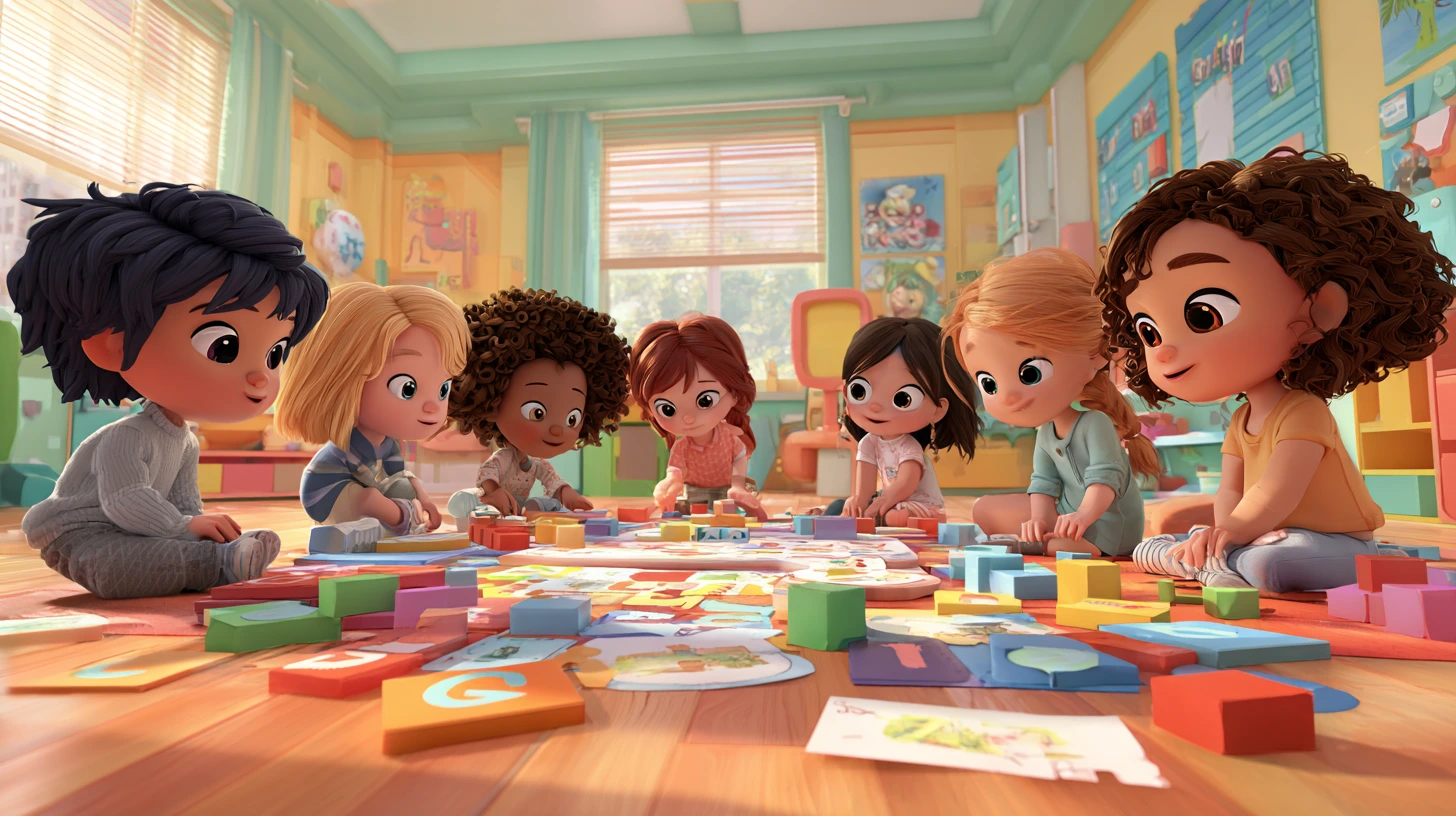
Interactive games serve as an ideal medium to foster cognitive development in preschoolers. These games often encompass puzzles, building blocks, board games, and screen-free adaptive tools, effectively engaging children in structured, play-based activities. These activities are instrumental in developing problem-solving skills, pattern recognition, and memory retention. By emphasizing exploration, experimentation, and critical thinking, children gain a deeper understanding of cause and effect, as well as strategic planning. Additionally, social games enhance skills such as negotiation, communication, and turn-taking, further boosting cognitive and emotional growth in preschoolers. Educational games play a pivotal role in this seamless integration of play, accentuating the role of games in improving preschool learning.
Research Findings Supporting Game-Based Learning
Systematic reviews of game-based learning illustrate moderate to large positive effects on cognitive, social, and motivational outcomes. These findings underscore the enhanced learning outcomes of interactive preschool games. By integrating gamified learning for preschool, specific cognitive skills such as working memory, attention span, and mathematical reasoning are significantly improved. Adaptive educational systems that tailor challenges to individual progress are instrumental in supporting cognitive development through games. This approach stands in stark contrast to traditional methods, proving more effective in fostering comprehensive child development.
Traditional Learning Methods Versus Gamified Approaches
When comparing traditional learning methods with gamified approaches, the differences in engagement and cognitive outcomes are striking. Traditional methods often involve rote tasks and worksheets, while gamified approaches employ interactive problem-solving and hands-on digital and non-digital games. The table below highlights these contrasts:
| Traditional Learning | Gamified/Interactive Learning | |
|---|---|---|
| Method | Direct instruction, rote tasks, worksheets | Interactive games, problem-solving activities |
| Engagement | May be limited, passive | High, active, and motivational |
| Cognitive Outcomes | Focus on memorization, foundational skills | Enhanced critical thinking, reasoning, creativity |
| Social Interaction | Often solitary or teacher-led | Collaboration, negotiation, and teamwork |
| Flexibility | Less adaptive, one-size-fits-all | Adaptive, individualized progression |
Gamification not only enhances cognitive development through games but also addresses individualized needs more effectively, as supported by extensive research.
Practical Examples and Their Measured Impact
Several key games highlight the cognitive benefits stemming from interactive play:
- Puzzle games improve pattern recognition, memory, and critical thinking. These activities foster cognitive growth by engaging children in resolving complex challenges.
- Building blocks enhance spatial reasoning, mathematical thinking, and problem-solving skills. As children construct and deconstruct models, they learn to visualize spatial relationships.
- Board and memory games develop attention spans, turn-taking, strategy, and memory. These games encourage strategic planning and foster cooperation with peers.
- Educational technologies like Magrid provide adaptive, screen-free play environments that foster logic and visual-spatial skills through research-backed activities.
- Outdoor or nature-based games stimulate observational skills and cognitive flexibility while encouraging physical activity.
Each of these examples drives more robust learning outcomes of interactive preschool games by providing diverse cognitive and social opportunities.
Conclusion
Research consistently shows that cognitive development through games leads to better preschool learning outcomes. Interactive, gamified learning environments in preschools not only bolster cognitive abilities but also elevate engagement, motivation, and social-emotional growth, surpassing the effectiveness of traditional methods. As educational technology continues to advance, adaptive tools represent a tremendous opportunity for educators and parents to support children’s developmental needs. By integrating research-based, interactive methods into educational practices, we can enhance the learning experiences and outcomes for preschoolers worldwide.
Incorporating these proven strategies into the classroom and at home not only benefits young learners but also lays the groundwork for ongoing cognitive growth. For further exploration, educators and parents are encouraged to consult the latest research on educational technology for preschool children and engage with community forums to share insights and practical tips on enhancing preschool learning through games.
FAQ
How do games benefit preschoolers’ cognitive development?
Interactive games challenge children to think critically, improve attention spans, and encourage social interaction. These activities support memory, problem-solving, and logical reasoning skills that are essential for early development.
What types of games are most effective for preschool learning?
Games that combine fun, engagement, and skill-building—such as puzzles, building blocks, board games, and adaptive digital or screen-free tools—are highly effective in supporting multiple dimensions of cognitive development.
Are digital or traditional formats better for young learners?
Both digital and traditional (screen-free) games can be valuable. The key is to provide a balanced approach, ensuring diverse play experiences that cultivate problem-solving, creativity, and social interaction.
